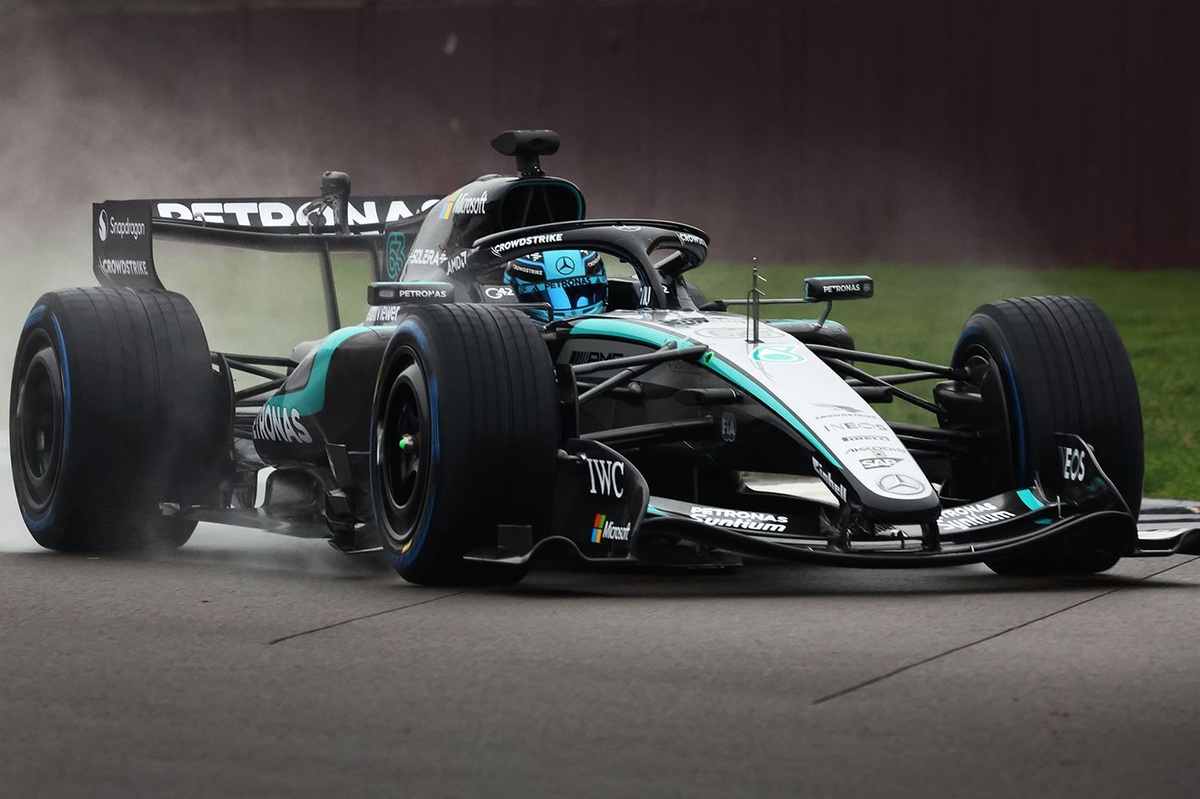
As Formula 1 prepares for the 2026 season, drivers and teams are anticipating significant changes that could transform racing dynamics. Among them, George Russell has expressed confidence that overtaking will become easier, thanks to the new generation of cars designed for increased agility and responsiveness.
The upcoming regulations aim to make F1 cars more nimble, allowing drivers to follow closely and execute overtakes with greater ease. Russell, driving for Mercedes, highlighted that the revised aerodynamics and chassis design will reduce the 'dirty air' effect, which has historically made following another car challenging.
He explained that the current cars often struggle with stability when closely following another vehicle, leading to reduced performance and increased difficulty in overtaking. The new regulations are expected to address these issues by improving ground effect and downforce management, thus enabling closer racing.
Russell emphasized that these changes could lead to a more competitive and exciting racing environment. He believes that drivers will be able to stay within striking distance of their rivals for longer periods, setting up more opportunities for overtaking maneuvers.
Moreover, the technological advancements in tire management and car setup are expected to complement the aerodynamic improvements. This synergy will allow drivers to push their cars to the limit without sacrificing stability, further enhancing overtaking prospects.
While the exact performance of the 2026 cars remains to be seen, Russell's optimism reflects a broader anticipation within the F1 community. Many see these regulations as a step toward more thrilling races, where skill and strategy play a more prominent role in overtaking and race outcomes.
In conclusion, George Russell's confidence in the upcoming season underscores the potential for a more dynamic and engaging F1 spectacle. As teams continue to develop their cars under the new rules, fans can look forward to a season characterized by closer battles and more overtaking opportunities, marking a new era for Formula 1 racing.